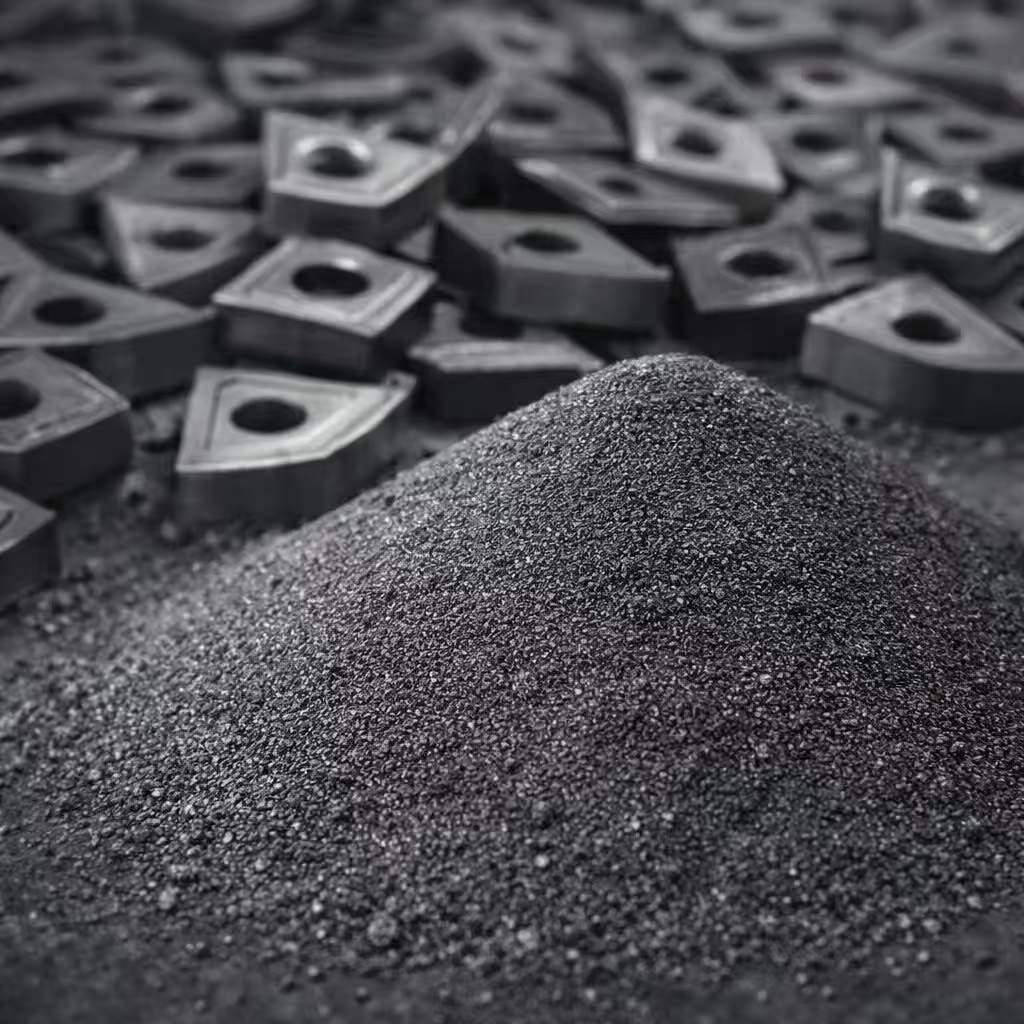
Known as the “industrial tooth,” tungsten carbide serves as the core raw material for cemented carbide. It is widely used in key sectors including machining, mining, aerospace, and new energy. In recent years, tungsten carbide prices have been on a steady upward trend, exerting significant cost pressure on downstream manufacturing industries. This price surge is no coincidence; it results from the combined effects of tightened supply, expanding demand, and the resonance of policy and cost factors, demonstrating strong rigidity and sustainability.
1,Tightened Supply: Resource Controls and Production Constraints
In recent years, the Chinese government has classified tungsten as a strategic advantageous mineral and consistently implemented total mining controls, with annual cuts to mining quotas in major producing regions. Meanwhile, stricter environmental inspections and workplace safety supervision have forced many small and medium-sized mines to suspend operations or undergo rectification, leading to a low overall operating rate across the industry. Long-term mining has depleted high-grade tungsten ores, lowering average ore quality and driving up mining and beneficiation costs—further reducing effective supply. other parts of the world mine projects face lengthy construction cycles and slow production ramp-ups, making it difficult to quickly fill the supply gap. The persistent tightness in global tungsten raw material supply has directly fueled the rise in tungsten carbide prices.
2,Surging Demand: Dual Growth from Traditional and Emerging Industries
Rapid demand growth stands as a key driver of tungsten carbide’s price increase. In traditional sectors, the recovery of the manufacturing industry and equipment upgrades have steadily boosted demand for cutting tools, molds, and mining implements—providing a solid foundation for tungsten carbide consumption. Emerging industries have emerged as critical growth engines: the booming photovoltaic sector has spurred a surge in demand for tungsten wires, driving up consumption of high-purity tungsten carbide; high-end manufacturing fields such as aerospace, defense, and semiconductors continue to increase their demand for high-performance cemented carbide.
3,Policy-Cost Resonance: Strategic Value Amplifies Price Momentum
Policy controls and cost transmission have further amplified the price surge. China has strengthened export controls on tungsten-related products to regulate export order, tightening the global supply landscape and driving synchronous increases in international market prices. Tungsten carbide production relies heavily on raw materials such as tungsten concentrate and cobalt powder; rising prices of these upstream inputs have directly passed through to the processing stage, significantly increasing enterprises’ production costs. Additionally, tungsten’s strategic resource status has been continuously reinforced, fostering long-term market expectations of its scarcity. This has boosted enterprises’ willingness to stock up, exacerbating short-term supply-demand tensions. Under the resonance of these multiple factors, tungsten carbide prices enjoy strong support and are unlikely to experience a significant downturn in the short term.
In summary, the rise in tungsten carbide prices stems from the overlap of three core factors: supply contraction, demand surge, and policy controls. This trend has not only reshaped the cost structure of the cemented carbide industry but also prompted downstream enterprises to accelerate technological upgrading and material optimization. Looking ahead, tungsten carbide will remain a scarce and high-value commodity, becoming a critical raw material influencing the supply chain security and economic efficiency of high-end manufacturing.